
CASE STUDY
Food Import Logistics & Supply Chain Management System
Problem
Company operating warehouses across 3 countries and served regional customers using a mixed fleet of full-size articulated trucks (for inter-warehouse and large customer deliveries) and smaller vans (for last-mile local distribution). Demand fluctuated significantly by season and customer, supply chains spanned multiple countries, and product shelf life created strict constraints on stock rotation.
Operations were managed largely manually: route planning via phone, inventory tracked in country-specific spreadsheets, and demand forecasting based on gut feel from sales managers.This led to sub-optimal route loading, spoilage from poor stock rotation, and capital tied up in excess warehouse inventory.
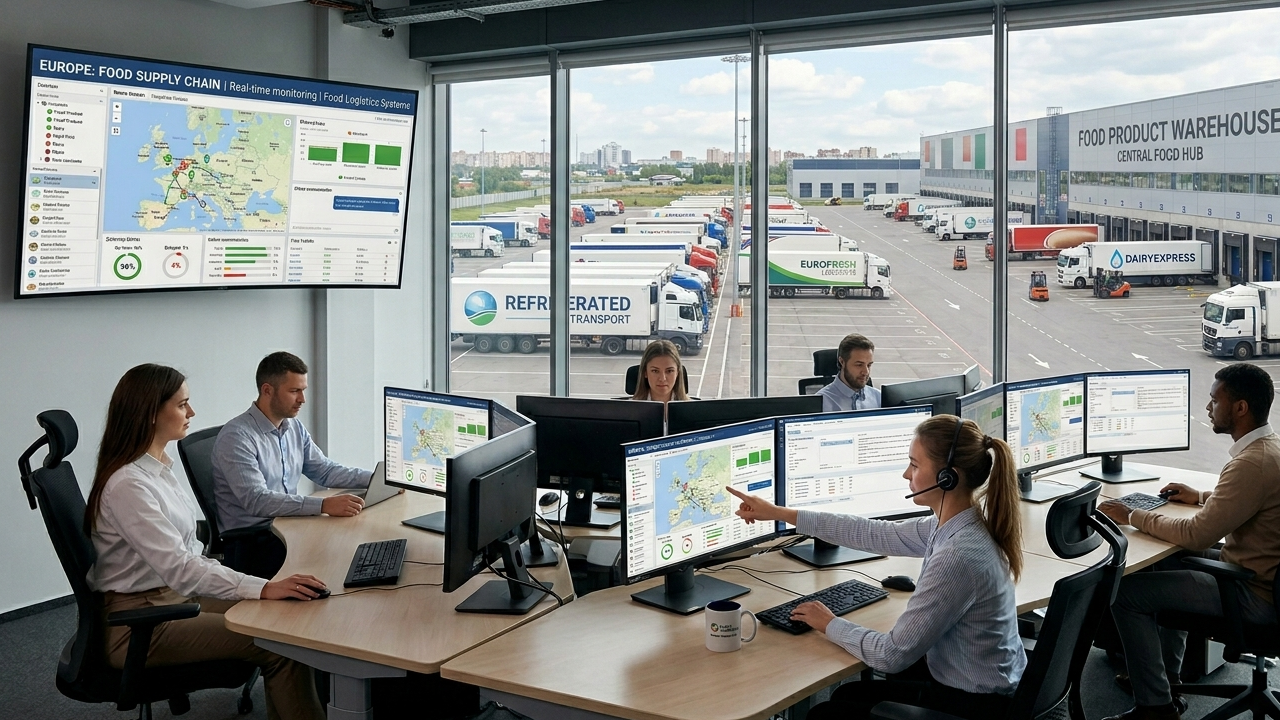
Solution
We built an end-to-end logistics and supply chain platform featuring AI demand forecasting, optimized routing for full-size trucks and last-mile vans (including multi-stop truck loads across 2–3 locations), warehouse inventory with spoilage tracking, and a comprehensive financial management layer covering all costs and revenues.
The platform manages the complete supply chain cycle, from forecasting customer orders for the upcoming week to generating invoices and calculating margins. It includes customer order pattern analysis to flag ordering deviations (providing early churn warnings or upsell opportunities and carrier performance tracking (monitoring on-time delivery rates, damage rates, and cost per km) to empower procurement teams during carrier negotiations.
Key Features
AI Demand Analysis & Forecasting
Machine learning model forecasts demand per customer and SKU (eggs by size/grade, flour by type, oil by pack size) using order history, seasonality, customer growth trends, and external signals (local events, holidays). Updates a 14-day rolling forecast daily.
Full-Size Truck Route Optimization
Optimizes loads for articulated trucks delivering between central warehouses and large customers. Combines multi-stop deliveries across 2–3 locations while accounting for time windows, driver hour regulations, and product compatibility constraints.
Last-Mile Van Routing
Daily route optimization for local delivery vans from regional warehouses to smaller customers. Factors in customer time windows, vehicle capacity, driver familiarity scoring, dynamic re-routing for failed/changed orders, and Google Maps integration for live traffic ETAs.
Warehouse & Inventory Management
Real-time stock visibility across all warehouses by product, lot, arrival date, and expiry date. Enforces FEFO (First Expired First Out) picking rules to prevent spoilage and generates inter-warehouse transfer recommendations to balance stock levels.
Spoilage & Loss Tracking
Logs loss events (egg breakage, flour moisture damage, oil oxidation, returns) categorized by cause, location, and responsible party. Automatically generates supplier claims for transit damage and flags abnormal loss costs for operational review.
Financial Management
Calculates total landed costs per shipment (product cost, customs, freight, warehouse handling, last-mile delivery). Tracks real-time gross margins per SKU, customer, and country alongside accounts payable and accounts receivable.
Key Achievements
Deploying the Food Import Logistics & Supply Chain Management System within 6 months delivered the following results:
-17%
Total transport cost achieved through route optimization and load consolidation
-25%
Reduction in product spoilage and waste losses via FEFO rules and improved forecasting
-20%
Reduction in overall warehouse inventory value through AI-driven replenishment planning
Why Food Import Logistics & Supply Chain Management System succeeded
The company transitioned from manual, fragmented spreadsheets to a unified digital ecosystem connecting warehouses across three countries. By automating route planning for the mixed fleet and deploying AI-driven demand forecasting, the platform maximized truck load capacity and minimized product spoilage within strict shelf-life constraints, eliminating excess inventory, unlocking working capital, and streamlining distribution.
Managing logistics and distribution?
We develop logistics solutions for any scale of complexity to eliminate manual operations, implementing custom AI and Computer Vision in logistics and warehousing. Schedule a discovery call, and our team will deliver a free 4-6 page strategic blueprint showing how a custom AI-driven solution can address your challenges.
Stack & Architecture
Frontend
React + TypeScript
All UI for Food Import Logistics & Supply Chain Management System
Backend
Python / FastAPI
Business logic, routing engine, forecasting model serving
AI / ML
Prophet + OR-Tools
Demand forecasting + Google OR-Tools for VRP optimization
Database
PostgreSQL
Single source and data storage
Maps
Google Maps Platform
Geocoding, distance matrix, live traffic-adjusted ETAs
Infrastructure
AWS
Hosted SaaS infrastructure